Date of Dispatch 7 July 2026 |
Reference No. 8 AF/HO 26-0707 |
Historical Event Date 4 July 1942 | |
Subject Independence Day Mission -- The Eighth's First Air Combat Strike | |
To Neuman, Ty W Maj Gen USAF AFGSC AFGSC/8th AF | |
From Callaway, William L CIV USAF AFGSC 8 AF/HO | |
General, The air combat debut by Eighth Air Force on 4 July 1942 used bomber aircraft borrowed from the Royal Air Force. The inaugural heavy bomber (B-17) air combat mission by the Eighth occurred on 17 August 1942.
4 July 1942, Independence Day Air Combat Mission: Eighth Air Force assigned 15th Bomb Squadron (15 BS) was one of the earliest bomber units to deploy to England where it began training with the Royal Air Force (RAF). Captain Charles C. Kegelman commanded the 15 BS and for the 4 July air combat mission; six Boston III light bomber aircraft were borrowed from the RAF’s 226 Squadron. The 15 BS and 226 Squadron had begun training together in April 1942.
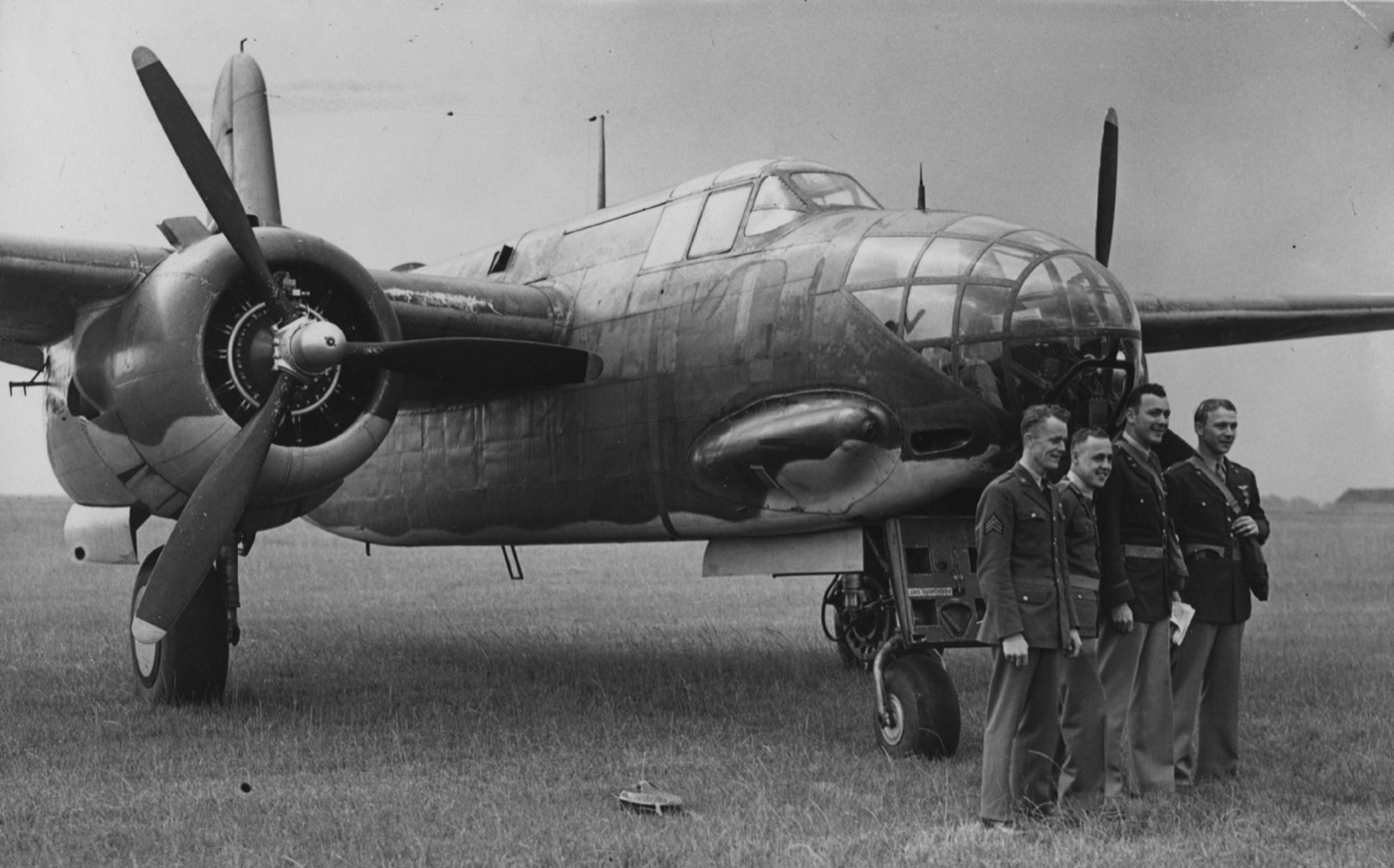
The Boston III bomber was the RAF name for the American-made Douglas A-2 bomber aircraft. For the 4 July mission, the RAF’s roundel aircraft markings on each borrowed airplane was replaced by the United States Army Air Forces’ white star and bar insignia. The designated targets were four airfield in The Netherlands occupied by the German Air Force. As noted farther below, this inaugural air combat mission by a young Eighth Air Force contained much symbolism.
Rest of the Story: A total of 12 light bombers – six flown by 15 BS aircrews and six flown by 226 Squadron aircrews – made low-level runs on their designated target airfields in The Netherlands. Captain Kegelman’s bomber (s/n AFL743) during the attack sustained a direct hit on its starboard engine. His attacking aircraft was so close to the ground that its right wing tip touched the ground and the aircraft’s aft scraped the surface of the airfield. Captain Kegelman being the pilot, managed to get his battle damaged aircraft and aircrew safely back to home station in England.
After the Independence Day strike, Captain Kegelman received an on-the-spot promotion to the rank of Major presented by General Carl A. Spaatz, the then Commander of Eighth Air Force and was also recognized being awarded the Distinguished Service Cross, thus being the first recipient in the Eighth to receive this high-level medal. The aircrew flying with Kegelman were each recognized with the Distinguished Flying Cross with this presentation made by Brigadier General Ira Eaker, the then Commander VIII Bomber Command where the 15 BS was assigned.
The Kegelman aircrew in the attached photograph consisted from left to right: Sergeant Bennie Cunningham, Technical Sergeant Robert Golay, Second Lieutenant Randall M. Dorton, and Major Kegelman.
Heritage Note: Previously on 29 June 1942, the two Non-Commissioned Officers had flown with Captain Kegelman in a Boston III belonging to the 226 Squadron during a RAF air combat mission thus becoming the first aircrew in the United States Army Air Forces as well as in the Eighth Air Force to strike German-occupied Europe.
Symbolism of Eighth Air Force’s Independence Day Mission: Although not much physical damage was done to the four German-occupied airfields struck by the six American-crewed bombers – this singular air combat strike showed that the Eighth was now on duty and willing to take the air battle to the enemy – specifically the German Air Force.
The downing of two American-crewed bombers resulted in seven Americans Killed-in-Action and one becoming a Prisoner-of-War – reflected the forthcoming sacrifices that Eighth Air Force aircrews would endure while conducting air combat operations in the air war over Europe.
The courageous and bold flying skills demonstrated by Captain Kegelman and his fellow aircrew members that allowed their battle damaged aircraft to return safely to home station in England – would be an example repeated hundreds of time by brave and resourceful Eighth Air Force aircrews during the war.
And the collaborative relationship forged between Eighth Air Force and the Royal Air Force would be sustained throughout the war years and continue to the present day.
Historian’s Note: Charles C. Kegelman started his career at Barksdale Field, Louisiana. After the Independence Day mission and completing his tour of duty with Eighth Air Force in the European Theater of Operations, he was eventually transferred to the Pacific Theater of Operations. On 9 March 1945, wearing the rank of full Colonel and leading his B-25 bomber group on an air combat mission over The Philippines, Colonel Kegelman was Killed-in-Action. He was interred in his hometown cemetery of El Reno, Oklahoma.
Special thanks to 22 year United States Air Force veteran and retiree, Brian “Buck” Rogers who provided information about conducting flight training operations at Kegelman Air Force Auxiliary Field near Cherokee, Oklahoma. This specific airfield was assigned as a sub-base to Vance Air Force Base, Oklahoma – that was named after Lieutenant Colonel Robert Vance, Jr., an Eighth Air Force bomber veteran and recipient of the Medal of Honor during World War II.
Lane
"History tells you where you are going and why."
"History makes you smart. Heritage makes you proud."
Historian, Eighth Air Force
Historian, Joint-Global Strike Operations Center
Historian, Air Forces Strategic-Air Directorates
Historian, 95th Wing
©2026 W. Lane Callaway