

Date of Dispatch 29 June 2026 |
Reference No. 8 AF/HO 26-0629 |
Historical Event Date 29 June 1955 | |
Subject B-52 Heritage -- The First Stratofortress | |
To Neuman, Ty W Maj Gen USAF AFGSC AFGSC/8th AF | |
From Callaway, William L CIV USAF AFGSC 8 AF/HO | |
General, A historic event influencing the global strike capabilities of today’s Eighth Air Force and with several heritage connections to Barksdale AFB.
29 June 1955, First B-52 Stratofortress strategic bomber: Brigadier General William E. Eubank, Jr., at the time Commander 93d Bomb Wing (93 BW) flew the first B-52 bomber aircraft accepted by the United States Air Force from the Boeing factory in Seatle, Washington to Castle AFB, California the home station of the 93 BW then assigned to Fifteenth Air Force.
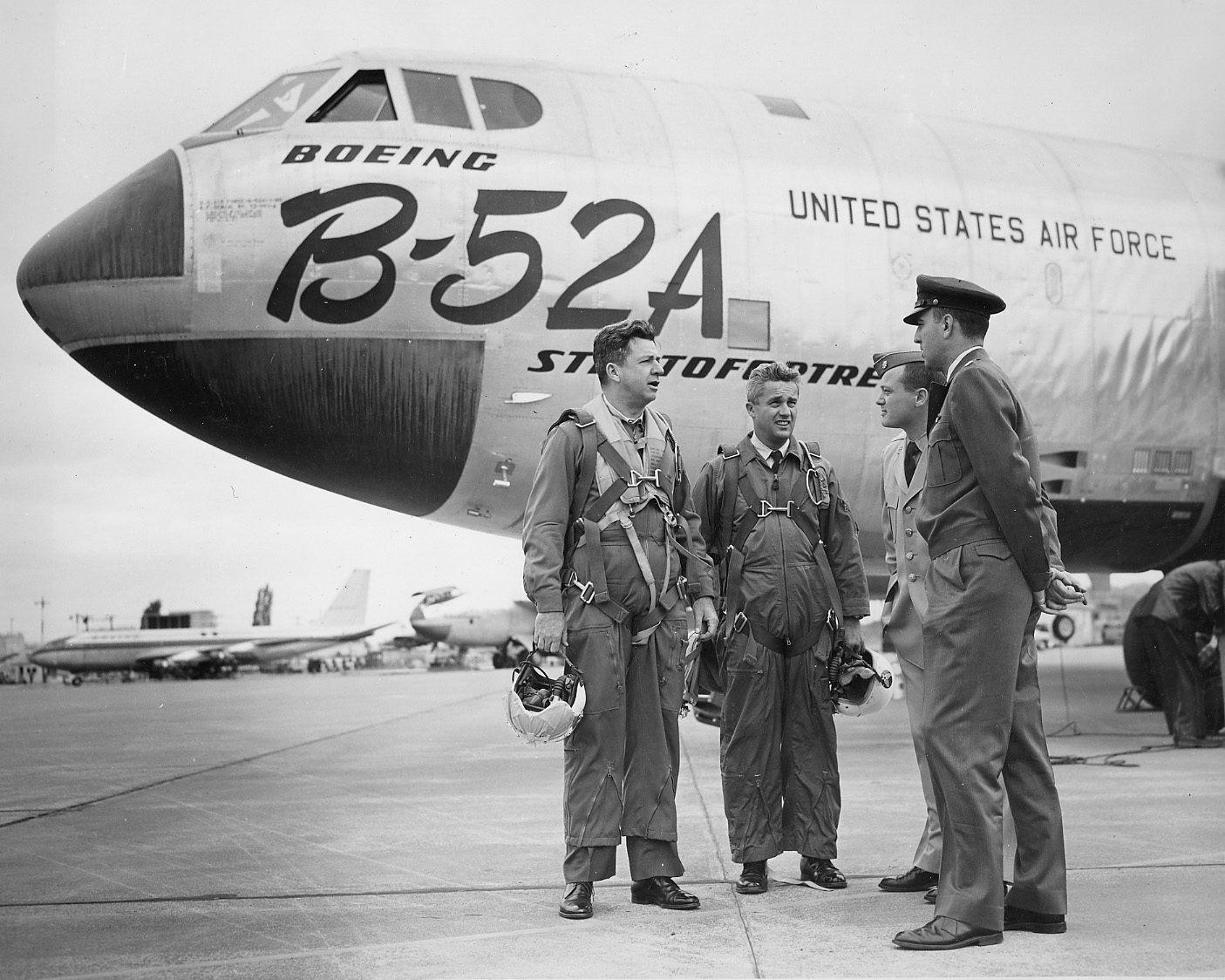
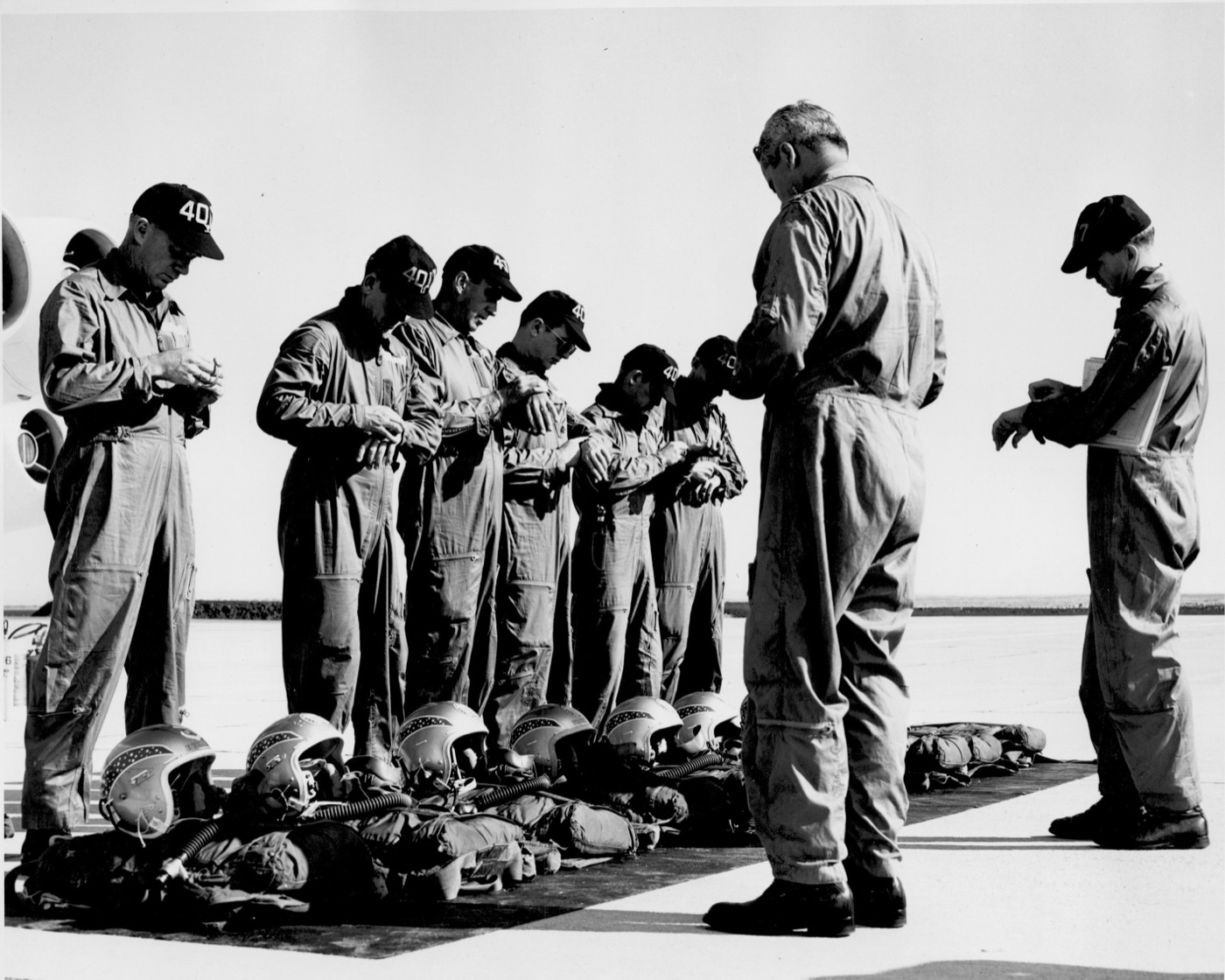
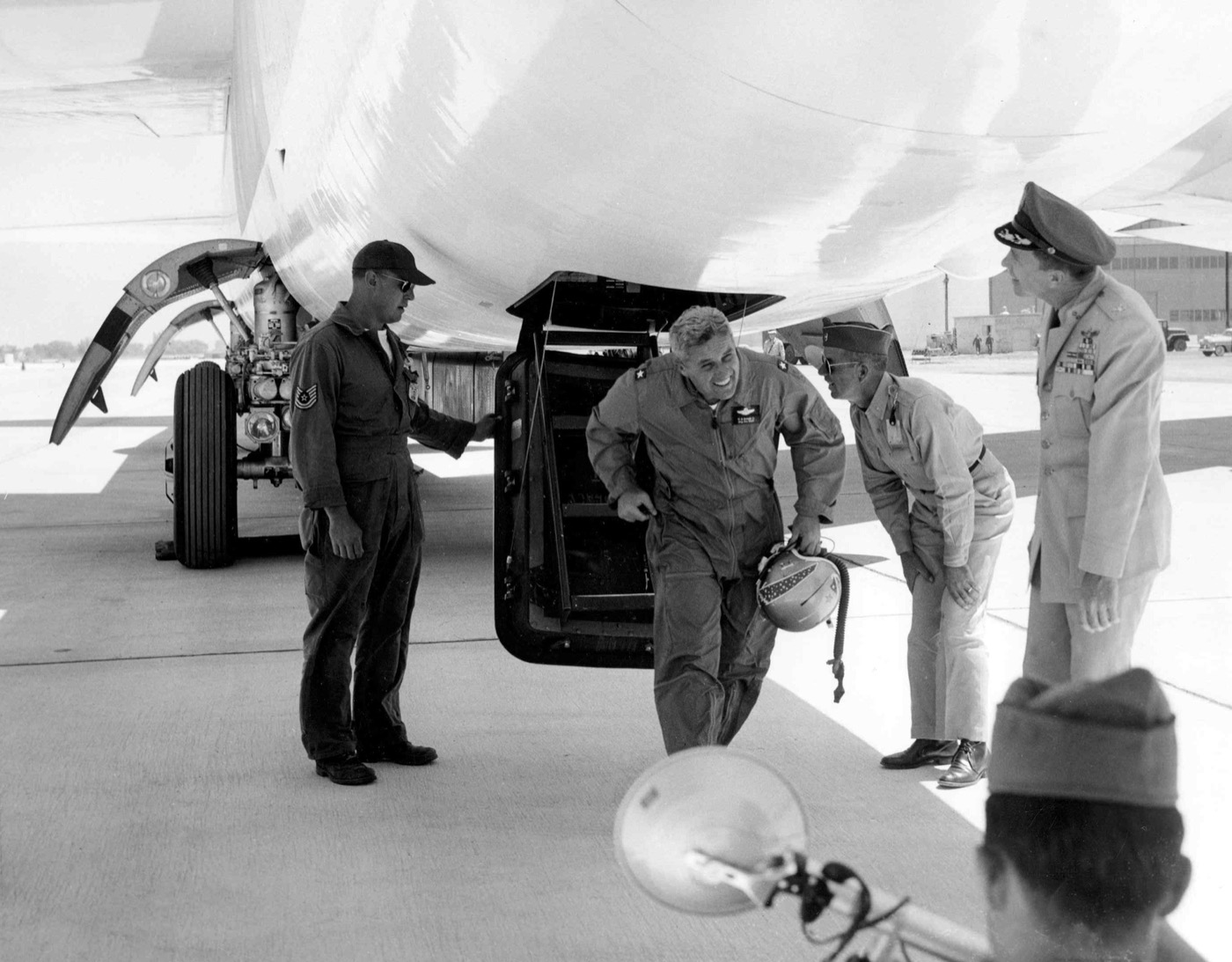
Three B-52A models were used for flight testing. The first attached photograph reflects Brigadier General Eubank at the Boeing factory in Seattle during a check ride with one of the B-52A models. The next photograph reflects General Eubank in a pre-flight check for the actual first B-52 (B-model, s/n 52-8711) accepted by the Air Force. The third photograph was taken on 29 June 1955 showing General Eubank exiting the first accepted B-52 after landing at Castle AFB. General Eubank became known as “Mr. B-52” and Castle AFB became the central airbase where B-52 aircraft and aircrew training was consolidated as the Air Force’s B-52 fleet grew. Between 1952 and 1962, a total of 744 B-52 bomber aircraft were built by Boeing at both its Seattle and Wichita (Kansas) factories.
The B-52 Stratofortress became the primary jet-powered bomber for the Strategic Air Command with its mission of deterrence and global airpower. Overtime the B-52 underwent upgrades and modifications that is continuing at the present time with the planned B-52J model. The very first B-52 bomber assigned to Eighth Air Force was a “C” model (B-52C, s/n 52-049) delivered on 1 December 1956 to the Eighth’s assigned 42d Bomb Wing stationed at Loring AFB, Maine.
Eighth Air Force Heritage Connection: Castle AFB, California as named in honor of Brigadier General Frederick W. Castle, the highest ranking Medal of Honor recipient in the Eighth during World War II.
Rest of the Story on General Eubank: Upon entering the United States Army Air Corps in February 1936 and after finishing flight training, Lieutenant Eubank was assigned to the Third Attack Group stationed at Barksdale Field, Louisiana. In November 1941, he became the Commander 91st Bomb Squadron (B-17 Flying Fortress) stationed in the Philippine Islands. After the attack by Imperial Japan on Pearl Harbor, Hawaii on 7 December 1941; Japanese forces attacked the Philippines and in the process destroyed all the Squadron’s B-17 bombers on the ground. Subsequently, Eubank led his squadron troops as improvised infantry on the Bataan Peninsula and as Japanese ground forces landed in the Philippines, he moved his troops to Corregidor Island, just off shore from Bataan.
Once established on Corregidor, Eubank was ordered to evacuate the island with the aim of forming a cadre of miliary aviation expertise with the ultimate goal of reconstituting American bomber airpower in the then created Pacific Theater of Operations. Along with others with specific expertise who were ordered off Corregidor, Eubank was evacuated in February 1942 by a United States Navy submarine and initially moved to Java and then in March 1942 moved to British India. Upon arriving in India, Eubank became the assistant operations officer for the newly activated Tenth Air Force.
After World War II, Eubank remained in military service transitioning to the newly established United States Air Force. In August 1948, he assumed command of 2d Bomb Group and deployed the unit to RAF Lakenheath, England during the Berlin Airlift. On 15 August 1959 wearing the rank of Major General, he became the Deputy Commander of Second Air Force at Barksdale AFB where he resided on base at 205 Hap Arnold Avenue (with these quarters becoming the residence for many Eighth Air Force Commanders and their families). After his retirement from active duty on 1 September 1965, Major General Eubank and his spouse resided in Shreveport where both of them continued to contribute to the well-being of Barksdale AFB and those who were serving on the base as well as becoming more involved in the local communities.
Memorialization: On 4 March 2009, the then 48th Commander Eighth Air Force – Lieutenant General Robert J. “Bob” Elder, Jr. – dedicated the Eubank Conference Center on Barksdale AFB in honor of Major General (retired) Eubank who attended the ribbon cutting along with his family. This formal memorialization designation was approved by General Norton A. Scwartz, the 19th Chief of Staff, United States Air Force.
Major General (USAF, retired) William E. Eubank, Jr. peacefully passed away on 3 September 2010, at age 98.
Historian’s Note: The Humble Historian for Eighth Air Force got the privilege of visiting with General Eubank and his family serval times at their home in Shreveport as well as being the author of the memorialization application. General Eubank was living history and quite a gentleman and leader who made a positive difference both in his military service and as a local civic leader.
Lane
"History tells you where you are going and why."
"History makes you smart. Heritage makes you proud."
Historian, Eighth Air Force
Historian, Joint-Global Strike Operations Center
Historian, Air Forces Strategic-Air Directorates
Historian, 95th Wing
©2026 W. Lane Callaway