Date of Dispatch 25 June 2026 |
Reference No. 8 AF/HO 26-0625 |
Historical Event Date 26 June 1948 | |
Subject Operation Vittles -- The Berlin Airlift | |
To Neuman, Ty W Maj Gen USAF AFGSC AFGSC/8th AF | |
From Callaway, William L CIV USAF AFGSC 8 AF/HO | |
General, An intersection of innovation and humanitarian heritages for Eighth Air Force with historic connections to three current bomber wings.
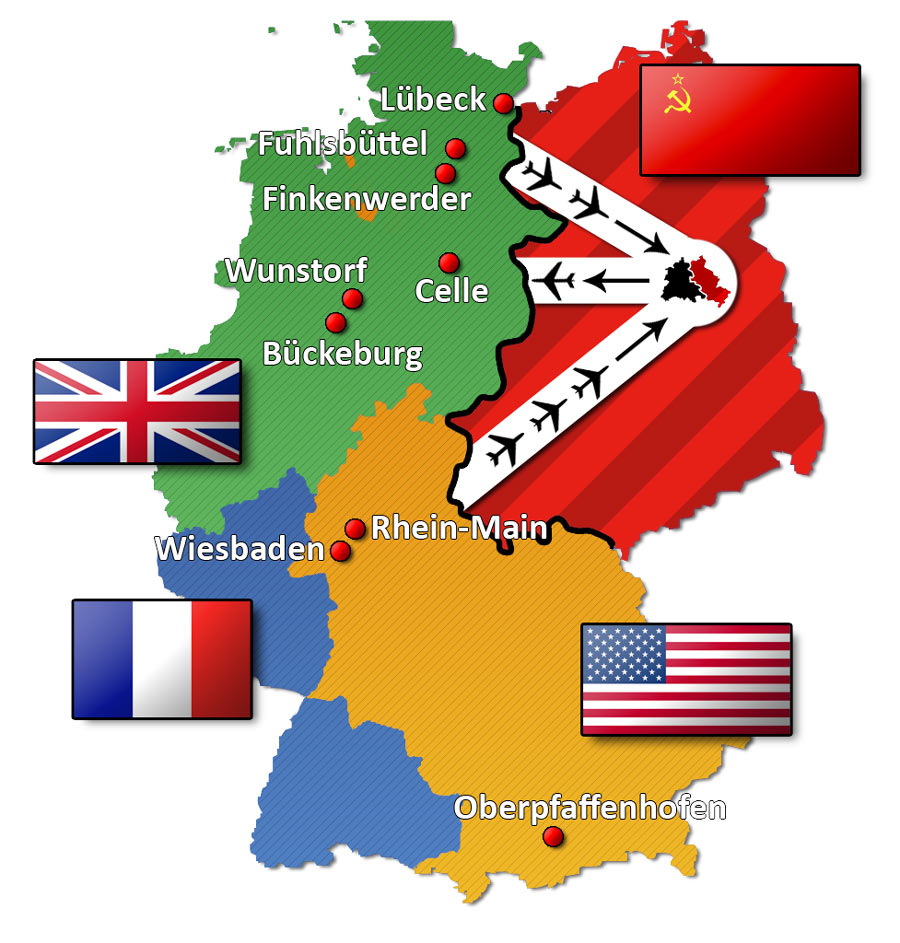
26 June 1948, Operation Vittles: The Berlin Airlift began on 26 June 1948 and continued through 12 May 1949. This massive airlift of supplies was in response to the Soviet blockade of road and rail access to the former Nazi capital city from American, British, and French zones of occupation in West Germany. Berlin itself was divided into four occupation zones with the city’s location deep in Soviet-occupied East Germany. The Soviets imposed the blockade on 24 June 1948 with this action constituting the first serious challenge by the Soviet Union testing Western resolve over Berlin and the future of occupied Germany. The American (USAF and US Navy cargo aircraft) airlifting of humanitarian supplies was called Operation Vittles. The companion humanitarian airlift effort by the Royal Air Force (RAF) was named Operation Plane Faire. At the start of Operation Vittles, the Commander United States Air Force Europe was General Curtis LeMay, an air combat veteran of Eighth Air Force during World War II. This response by the Western Powers using an airlift of humanitarian supplies to West Berlin can be argued as being the first significant large-scale non-combat use of military airpower in peacetime for political reasons. The humanitarian airlift flowed from West Germany to West Berlin and return to the west along three previously authorized air corridors (see map graphic). The Soviet reactions to the humanitarian airlift – once inside one of the three air corridors – included harassment of the unarmed cargo aircraft by Soviet fighters and Soviet ground-based search lights harassing the inflight cargo aircraft during hours of darkness as the airlift operations were conducted both day and night times.
Rest of the Story: Eighth Air Force (8 AF) played two significant roles in this historic humanitarian airlift operation.
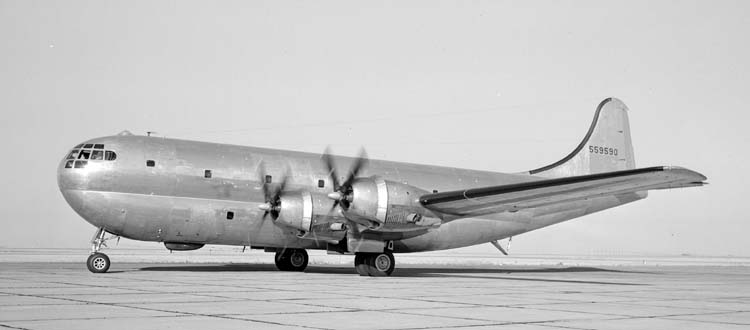
First Role – Innovation: An experimental cargo aircraft that at the time was being field tested by the Eighth, was flown in support of the Berlin Airlift. This experimental cargo aircraft was the YC-97A (s/n 45-59590), a former B-29 bomber airframe that had been converted into a cargo aircraft (see second attachment). A young independent United States Air Force decided to deploy the YC-97A – along with its assigned 8 AF air and ground crews as well as civilian testing technicians – to participate in Operation Vittles. For the Berlin Airlift, the YC-97A completed 60 airlift missions carrying humanitarian supplies to West Berlin. This successful participation in deployment and testing in an actual air operation, resulted in the Air Force accepting this cargo aircraft into its inventory as the C-97 Stratofreighter.
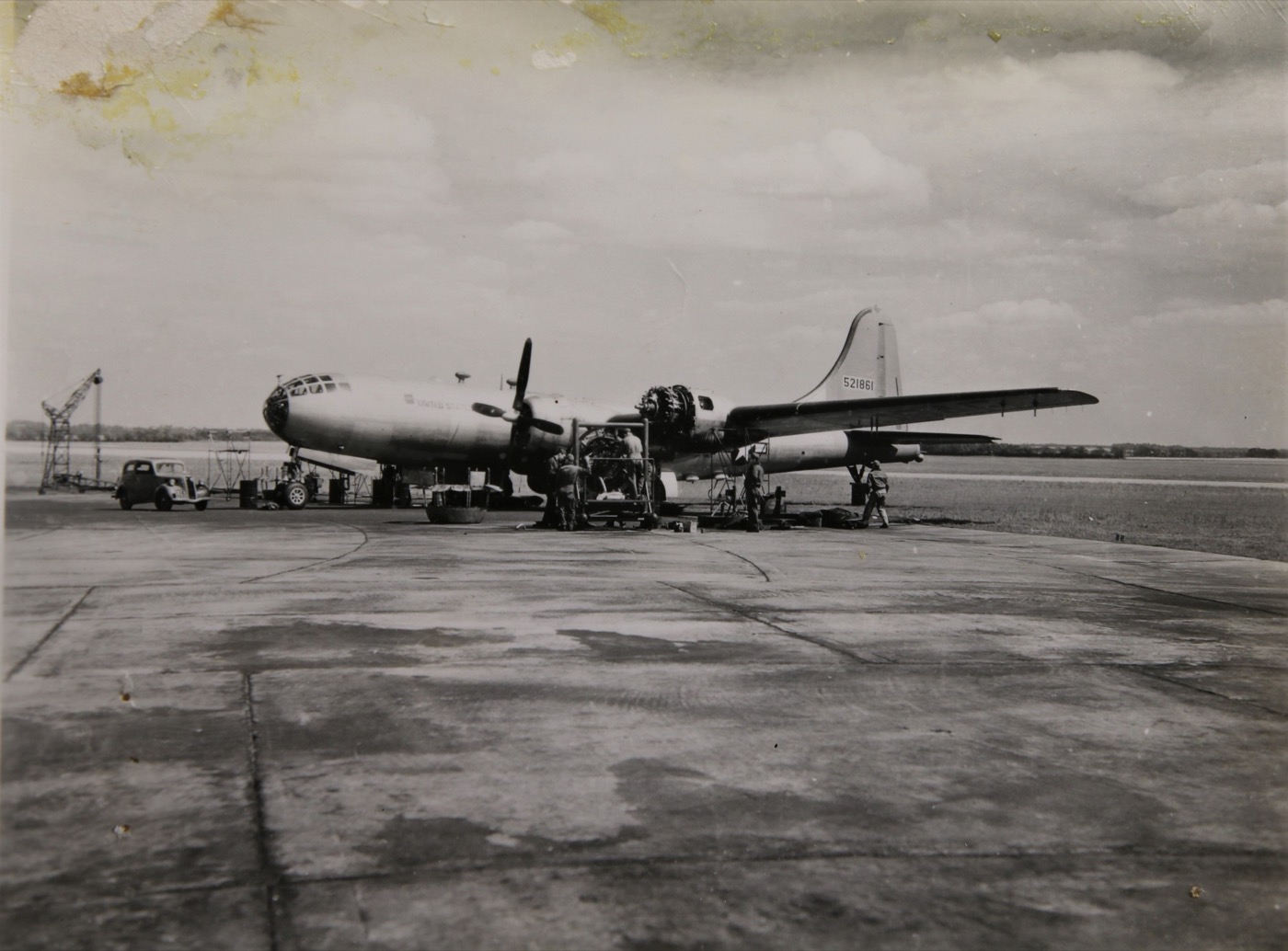
Second Role – Expeditionary Deployment of Bomber Units: B-29 Superfortress units assigned to the Eighth conducted 90-day rotational cycles to England. Various bomber units stationed in the United States began in mid-1948 to be rotated to RAF bases in England as a show of force and messaging to the Soviets not to escalate the Berlin crisis. Specifically bomber units assigned to the Eighth Air Force began to rotate in Spring 1949 with the 509th Bomb Group (509 BG) deployed to both RAF Marham (see third attachment) and RAF Lakenheath. The Soviets were aware of the lineage of the 509 BG whose lineage ancestor had dropped atomic bombs in World War II. And the Soviets understood that in its pre-deployment preparations, the 509 BG more than likely completed re-fresher training on atomic bomb release techniques. Being unsure if the 509 BG had deployed to England with atomic weapons along with speculation of other factors most likely caused the Soviets to begin backing away from the blockade starting in late April 1949 with eventual ending it on 12 May 1949. As noted, the rotational deployment of bomber units by the Air Force supporting Operation Vittles began in mid-1948. Two bomber units – at the time not assigned to the Eighth – conducted expeditionary deployments to England and included 28th Bomb Group deploying to RAF Scampton from 19 July to 19 October 1948; while 2d Bomb Group deployed to RAF Lakenheath starting in August 1948.
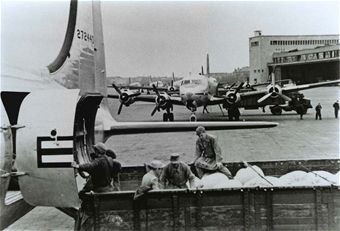
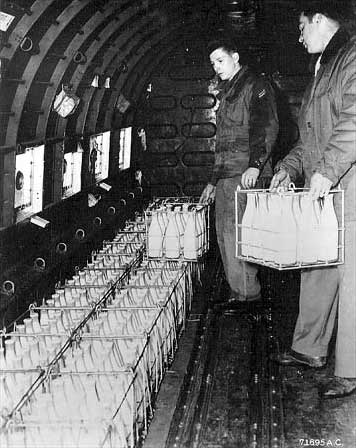
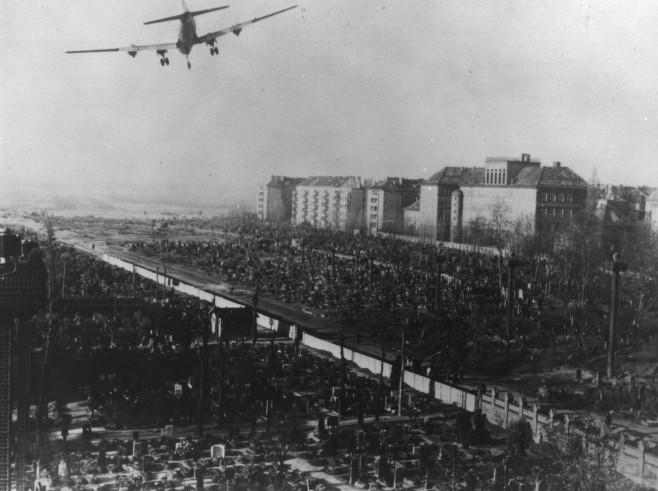
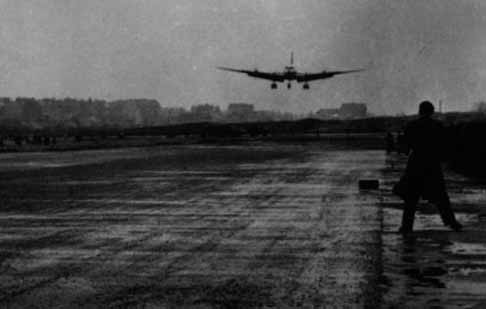
Achievements and Costs: The Berlin Airlift (see last four attached photographs) achieved its humanitarian objective. Although the Soviet blockade ended on 12 May 1949, the humanitarian airlift continued until end of September 1949 so to build up a stockpile of supplies in West Berlin. During the airlift some 227,264 sorties were conducted carrying some 2.3 million tons of supplies. Specifically for the American-conducted Operation Vittles, some 1.8 million tons of humanitarian supplies were flown into West Berlin including the loads aboard the Eighth Air Force’s lone experimental cargo aircraft. During the airlift effort, 30 Americans service members and one American civilian lost their lives in 12 aircraft crashes.
Historian’s Note: Per the deployment of 509 BG rotation to England in the Spring 1949, the deployment was conducted without special munitions aboard the deploying bomber aircraft. (Special thanks to Dee Gullickson, 509 BW Historian for the vintage photograph of the 509 BG’s B-29 deployment to RAF Marham, England.) For the American bomber units participating in expeditionary operations supporting Operation Vittles, all were equipped for conventional munitions.
Lane
"History tells you where you are going and why."
"History makes you smart. Heritage makes you proud."
Historian, Eighth Air Force
Historian, Joint-Global Strike Operations Center
Historian, Air Forces Strategic-Air Directorates
Historian, 95th Wing
©2026 W. Lane Callaway