Date of Dispatch 21 May 2026 |
Reference No. 8 AF/HO 26-0521 |
Historical Event Date 21 May 1944 | |
Subject Inspiring Air Warrior Story -- Lt R. E. Shepard | |
To Neuman, Ty W Maj Gen USAF AFGSC AFGSC/8th AF | |
From Callaway, William L CIV USAF AFGSC 8 AF/HO | |
General, An inspiring story of an Eighth Air Force air warrior, his "can do" attitude, and the very human story behind the history.
21 May 1944, First "Chattanooga" mission flown by fighters of Eighth Air Force: VIII FC FO #344 dispatched 617 fighters - a mix of P-38s, P-47s, and P-51s - to attack locomotives, rolling stock, and rail bridges throughout western Germany. The name "Chattanooga" denoted the initial air campaign focused on the German rail system as part of the larger campaign preparing for the then forthcoming D-Day at Normandy, the return of Western Allied ground forces to the Continent of Europe.
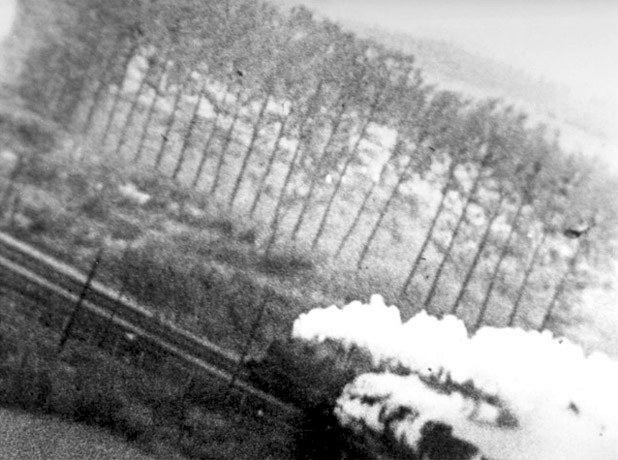
Using the "fighter sweep" air attack tactic on a specific target set, this massive use of Eighth Air Force (8 AF) fighter aircraft struck 291 locomotives (see first attached photograph) with 91 credited as destroyed while P-47s fighters struck railway bridges by delivering 500 pound bombs on this designated target set. One creative P-51 pilot struck a target of opportunity inside Germany and tried to claim victory credits for striking this ground target. However, the fighter group's intelligence analyst and air controllers denied this pilot's claim of 25 German cows!!!
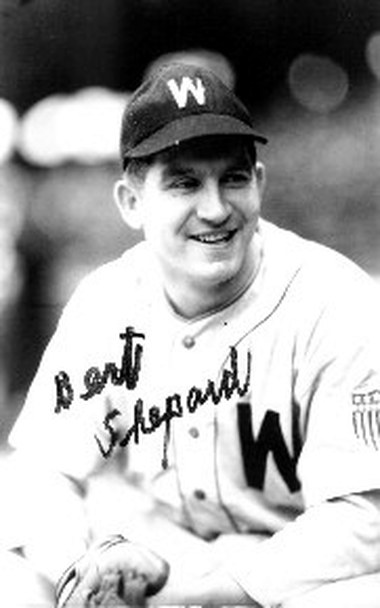
One of the attacking P-38s (s/n 42-67713) was piloted by Lieutenant Robert E. "Bert" Shepard assigned to the Eighth's 55th Fighter Group. Before the war, Bert had been a promising left-handed pitcher in the minor baseball leagues and had a dream of being a pitcher in the major baseball league.
The Chattanooga fighter sweep of 21 May marked Bert's 34 air combat mission as well as his last when his fighter aircraft was hit by anti-aircraft fire near Helmstadt, Germany. Anti-aircraft shrapnel came through the fighter's fuselage striking Bert's right foot and leg while another piece of shrapnel clipped his chin causing Bert to lose consciousness. Miraculously Bert survive the resulting belly crash landing in an agricultural field. Upon regaining limited consciousness still in the crashed aircraft, Bert faced a threat of being killed on the ground by angry German farm workers on whose land the fighter had crash landed. Fortunately, a German Army doctor with two guards arrived at the crash scene where they intervened and took the semi-conscious Bert as a Prisoner-of-War (POW).
Rest of the Story: Bert was evacuated to a hospital where the doctors saved his life but unfortunately had to amputate his right leg eleven inches below the knee. Upon eventual transfer to a POW compound, an artificial leg was fashioned by a fellow POW, a Canadian medic. Shortly afterwards, for exercise, Bert began to practice baseball pitches. Bert after being at the POW for some eight months, returned to the United States in February 1945 as part of a wounded POW exchange. Arriving at Walter Reed Hospital, Bert was fitted with a proper prosthesis leg and presented with a military decoration by the Undersecretary of War Robert Patterson.
Undersecretary Patterson in meeting Bert, learned of his pre-war career as a pitcher in the minor baseball leagues, his practicing of pitches as a POW in Germany, and Bert's desire and goal to return to playing baseball despite his artificial leg. Patterson called his good friend Clark Griffith, the owner of a major league baseball team - the Washington Senators -- and subsequently, Griffith met Bert and gave him a pitching try-out. Griffth was so impressed watching Bert's left handed pitches and moving around as if he had no artificial leg. This try-put resulted on 29 March 1945 with Bert being signed by the Senators to their minor farm team. Within a short time, Bert was added on the Senator's roster (see second attached photograph). Before one major league game started and at home plate, Bert was presented with the Air Medal by General Omar Bradley.
Bert got his chance to pitch in a major league baseball game. On 4 August 1945, in a game against the Boston Red Sox team, the Washington Senators found themselves down in the fourth inning with a lopsided score of 14 to 2. Bert was called to the pitcher's mound where he pitched five and a third innings - giving up only one run on three hits. Although the Senators could not overcome the score disadvantage, Bert had achieved his long-held, pre-war dream to pitch in the major leagues. On 31 August 1945, Bert was once again called out on the baseball field during a Senator's baseball game - not to pitch but to receive the Distinguished Flying Cross.
Bert on 30 September 1945 was released by the Senators but he continued to play baseball in the minor leagues. He also began a most successful business career and became an avid golfer. During his short major league baseball career, Bert also visited fellow amputees in Veteran Hospitals around the country giving these wounded warriors encouragement.
The Human Story behind the History: There was a wartime mystery that Bert wondered about - who had saved him from his crashed aircraft in 1944. Through a British friend, Bert finally met the German doctor who had not only pulled him out of the wreckage but also prevented an angry crowd of German farm workers from taking action to kill a downed American pilot. Bert and retired Dr. Ladislaus Loidl met in Austria on 21 May 1993 - some 49 years to the day of the doctor rescuing Bert from his crashed fighter in a German field.
Robert E. "Bert" Shepard - an Eighth Air Force air combat veteran, wounded air warrior, an amputee, and "can do" role model peacefully passed away on 16 June 2008, at age 87. He was determined to play professional baseball and overcame physical challenges to achieve his goal. Bert is credited in Major League History as the only player with an artificial leg to have played in a major league baseball game.
Lane
"History tells you where you are going and why."
"History makes you smart. Heritage makes you proud."
Historian, Eighth Air Force
Historian, Joint-Global Strike Operations Center
Historian, Air Forces Strategic-Air Directorates
Historian, 95th Wing
©2026 W. Lane Callaway