Date of Dispatch 14 May 2026 |
Reference No. 8 AF/HO 26-0514 |
Historical Event Date 12-15 May 1945 | |
Subject Operation Revival -- Liberation of Stalag Luft I | |
To Neuman, Ty W Maj Gen USAF AFGSC AFGSC/8th AF | |
From Callaway, William L CIV USAF AFGSC 8 AF/HO | |
General, An example of the physical and moral courage of a senior Eighth Air Force officer under extreme circumstances taking care of those he was responsible for, as well as another example where the Eighth used its air capabilities in a humanitarian operation.
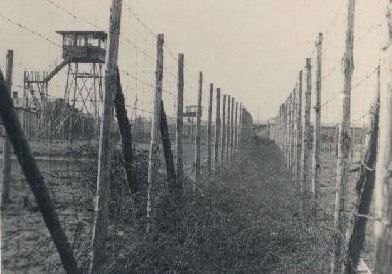
12-15 May 1945, Operation Revival - liberation of Stalag Luft I: The German term Stalag translated as Prisoner-of-War (POW) compound with the word Luft denoting the POW camp specifically holding captured air personnel. During World War II, it was a common practice by the Germans as well as the Allies Powers, to separate captured officer and enlisted personnel into separate compounds. As the war continued, POW compounds became composed of numerous camps within a numbered POW complex.
Beginning late 1944 into early 1945, senior German officials in Berlin ordered the evacuation of POW compounds in both German-occupied eastern Europe and East Germany. The purpose of this large-scale evacuation was to escape the westward ground advance of the Russian Army. The POW inmates of these camps were not in good physical condition, not well fed, tired, and with many sick.
Stalag Luft III - Located in East Germany began in January 1945 to march its captured Allied air inmates westward during a blizzard causing hundreds of prisoners to perish during this force march.
Stalag Luft IV - Beginning on 6 February 1945, this POW compound in German-occupied Poland was evacuated with its inmates consisting mostly of captured enlisted Allied Airmen with many from bomber aircrews belonging to Eighth Air Force (8 AF). This force march westward lasted 86 days, covered almost 600 miles, ending on 2 May 1945, with these POWs liberated by the advancing British Second Army near Berlin. Nearly 1,000 enlisted Airmen perished on this march.
Connection to Stalag Luft IV - One of the enlisted survivors of the force march from this POW compound was a B-24 gunner who had completed 28 air combat missions with Fifteenth Air Force (15 AF) stationed in Italy. This enlisted Airman remained in military service after the war, transitioning to the United States Air Force in 1947. On 3 April 1976, this former POW - Paul W. Airey - became the first Chief Master Sergeant of the United States Air Force.
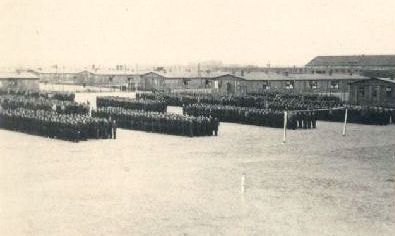
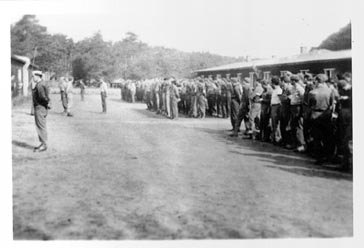
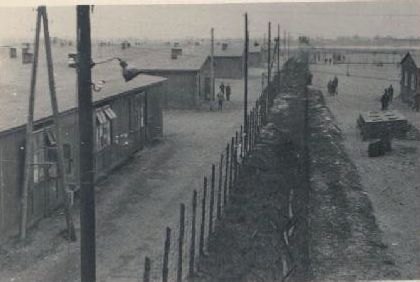
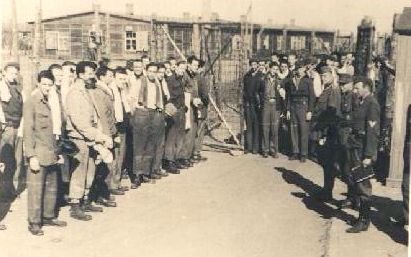
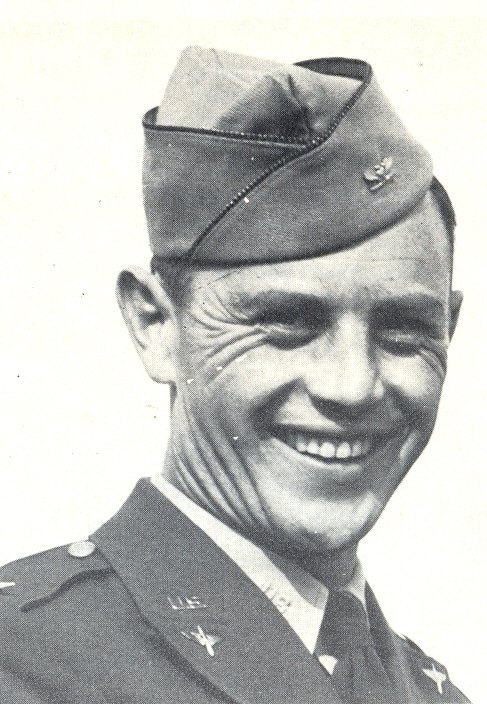
Stalag Luft I - A complex of several POW compounds and camps located near the town of Barth in northern Germany held 7,717 American and 1,427 Royal Air Force (RAF) flying officers (see first five attached photographs). The Senior Allied Officer was Colonel Hubert A. "Hub" Zemke (see sixth attached photograph) an 8 AF fighter ace credited with 19.5 aerial victories and assigned to the Eighth's famous 56th Fighter Group. Colonel Zemke was ordered by Oberst von Warnstadt, the German Air Force Commandant of Stalag Luft I, to prepare his fellow POWs for evacuation westward by a forced march. This order was given to Colonel Zemke late in the day on 28 April 1945 with the approaching Russian ground forces nearby, estimated 25 miles away from Stalag Luft I.
Rest of the Story: Colonel Zemke's reply to the Commandant - "not moving" - instead Zemke persuaded the Commandant to save himself and his guards with them evacuating and moving westward.
The Commandant ordered the multiple gates of the POW compound to be opened and then with the assembled guard force began moving westward thus leaving the POWs to their fate. Within a short time, the leading elements of the Russian Army arrived at Stalag Luft I. The Russians commanders came up with an evacuation plan for the now liberated POWs to be move through Russia to a seaport on the Black Sea and there board ocean-going ships to be moved back to England.
Colonel Zemke's replay - "not moving" - and he made a deal with the Russians. The liberated POWs would not interfere with Russian operations outside Stalag Luft I while the Russian would not enter the compounds. Also this gentlemen's agreement included that local Germans civilians would not be given shelter inside the compounds since many local Germans had approached Zemke to provide safe haven just before the Russian ground forces arrived. The Russians elsewhere in Germany had already demonstrated hostile actions against German civilian populace in areas the Russian Army had overrun and occupied. Needless to say, there were some tense moments with the compound dealing with both individual Russian soldiers and German civilians. And there were a few cases where liberated American former POWs took it upon themselves to leave the compound and flee westward resulting in very few making contact with advancing British or American ground forces.
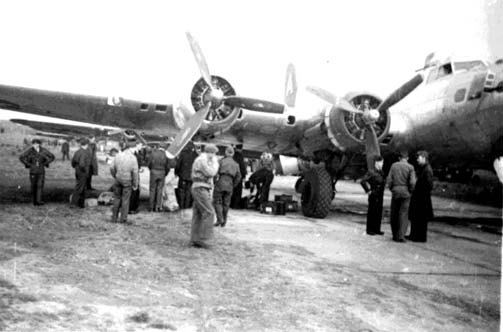
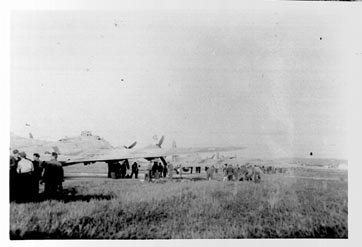
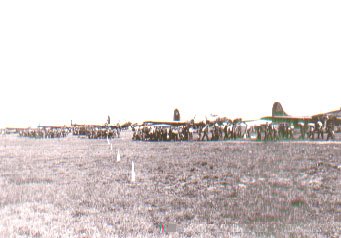
Taking the initiative and using a German radio, Colonel Zemke directly contacted 8 AF in England to begin arranging an airlift evacuation of the liberated POWs from Stalag Luft I. From 12 to 17 May, with Russian collaboration, B-17s from the Eighth - modified to carry personnel - landed near Barth and began the humanitarian airlift (see last four attached photographs). Liberated RAF personnel were evacuated first and flown to England with most of these RAF flying personnel having been held the longest. Liberated American personnel were airlifted to Camp Lucky Strike in the Normandy area of France for medical examination and processing back into American military control.
Unique Heritage Connections: Among the airlifted officers was Lieutenant Colonel Charles Greening assigned to 15 AF operating out of Italy - earlier on 18 April 1942 and wearing a lesser rank he piloted Raider 11 as part of the Doolittle Raiders which launched off an aircraft carrier and struck Imperial Japan. Also liberated from Stalag Luft I was Lieutenant John C. "Red" Morgan of 8 AF who was the only person to become a POW after being presented with the Medal of Honor - and who became one of the primary character models in the novel and movie about Eighth Air Force titled, Twelve O'Clock High.
Eyewitness to History: Sergeant Thomas (Tom) Creekmore, assigned to the Eighth's 305th Bomb Group and a B-17 radio operator with 19 air combat missions, recalled ground crews in England installing plywood flooring in the bomb bay areas of bomber aircraft to allow personnel to sit and then landing near Barth, Germany on a grass runway topped with steel matting. Sergeant Creekmore's B-17 airlifted 30 liberated POWs - five sitting in the B-17's nose area, 20 on the plywood covered bomb bay area, and five in the aircraft's radio room. Of all the air missions flown by Mr. Creekmore in World War II, he noted this humanitarian airlift mission to Barth was the most memorable.
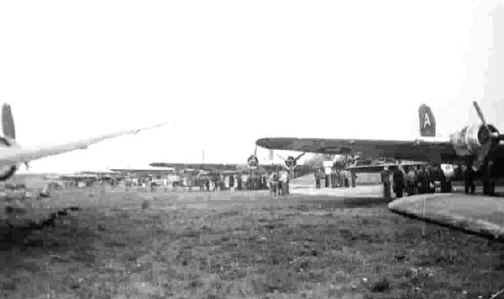
Eyewitness to History: Alan H. Newcomb, a flying officer with the Eighth's 401st Bomb Group noted the scene at the makeshift runway near Barth: "B-17s were landing and taking off at a rate of twenty every half hour, and we were loaded thirty men to a ship." Needless to say, Mr. Newcomb was very happy sitting on the plywood within the B-17 airlifting him out of Germany. Mr. Newcomb had become a POW at Stalag Luft I on 30 September 1944.
Putting Others First: Colonel Hubert A. "Hub" Zemke, the brave and resourceful Senior Allied Officer at Stalag Luft I was airlifted out of Barth on the last B-17; putting his fellow liberated comrades first. Colonel Zemke remained on active duty and retired from the United States Air Force in 1966 with 30 years of military service. Colonel Zemke passed away on 30 August 1994 and was posthumously inducted into the National Aviation Hall of Fame in 2002.
Lane
"History tells you where you are going and why."
"History makes you smart. Heritage makes you proud."
Historian, Eighth Air Force
Historian, Joint-Global Strike Operations Center
Historian, Air Forces Strategic-Air Directorates
Historian, 95th Wing
©2026 W. Lane Callaway